Understanding Behavior Plans: What Is a BIP in ABA?
You just walked out of an IEP meeting, and somewhere between all the acronyms, someone said your child needs a "BIP." You nodded along, but now you are sitting in your car wondering what you actually agreed to. If that is you, take a breath. You are not behind, and you are not alone. Acronyms come fast in these meetings, and very few parents leave feeling like they understood every word.
Let's slow down and walk through what a BIP really is, why it exists, and how it fits into the bigger picture of supporting your child.
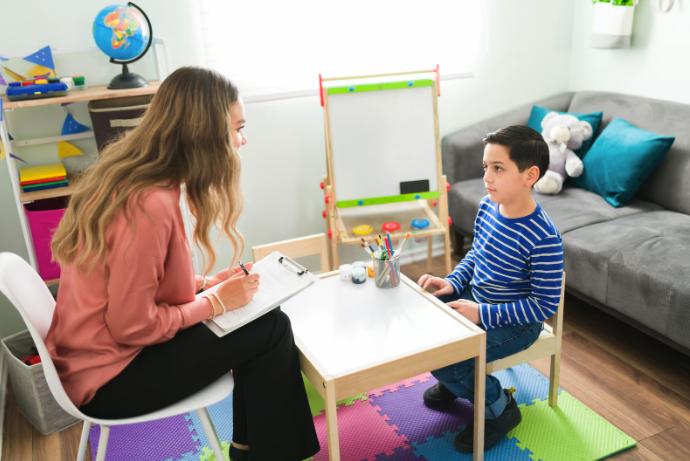
What Is a Behavior Intervention Plan (BIP)?
A BIP, or Behavior Intervention Plan, is a written, individualized plan that describes how the adults around your child will respond to a specific behavior that is getting in the way of learning, safety, or connection. It is not a punishment system, and it is not a record of everything your child does wrong. At its heart, a BIP is a plan for support.
The idea that guides a good BIP is simple: behavior is communication. When a child hits, bolts from the room, or melts down during transitions, that behavior is usually telling us something. Maybe a task feels too hard, maybe the room is too loud, maybe they want a break and do not yet have the words to ask. A BIP is built around understanding that message, not just reacting to it.
Why a BIP Starts With Understanding, Not Stopping Behavior
Before anyone writes a single strategy, the goal is to figure out why a behavior is happening. This is where something called a Functional Behavior Assessment, or FBA, comes in. An FBA is a careful look at the patterns around a behavior: what tends to happen right before it, what happens right after, and what need the behavior might be meeting for your child.
Every behavior serves a purpose, even the ones that feel disruptive. That purpose is often called the function. A child might be trying to escape a difficult demand, get attention, access something they want, or meet a sensory need. Once we understand the function, we can teach a more workable way to meet that same need. This is the part that matters most, and it is the foundation of how ABA therapy approaches behavior in the first place. We are not trying to change who your child is. We are helping them get their needs met in ways that open more doors for them.
What's Inside a BIP
A well-written BIP usually covers a few key things, described in plain language so everyone on the team can follow it consistently.
First, it describes the behavior clearly and objectively. Instead of a vague note like "acts out," it might say "leaves his seat during writing tasks." Specific descriptions help everyone respond the same way.
Second, it names the likely function of that behavior based on the FBA, so the whole team understands the why.
Third, and most importantly, it lays out the replacement skills your child will be taught. If a child leaves their seat to escape a hard task, we teach them to request a break instead. The goal is always to build a skill, not just remove a behavior.
Finally, a BIP describes how the adults will respond and support your child, and how progress will be tracked over time. A strong plan also pays attention to generalization, which simply means helping a new skill show up across different settings rather than only in one room with one person. You can read more about how this kind of individualized planning works in our ABA program.
How a BIP Connects to Your Child's IEP
Here is where the IEP meeting comes back in. An IEP, or Individualized Education Program, is the broader plan that guides your child's education and support at school. When behavior is significantly affecting learning, a BIP often lives alongside the IEP as a more focused plan for that specific area.
The two work together. The IEP sets the educational goals, and the BIP describes how the team will support the behavior that is getting in the way of those goals. School is often where behavioral challenges become most visible, which is why so many of these conversations start there. If you want a fuller picture of how behavioral support shows up in the classroom, we wrote about that in supporting your child at school with ABA services. For families who want dedicated behavioral support in that setting, our school-based ABA treatment is designed to work right alongside the school team.
How Our Team Builds a BIP in the Greater Los Angeles Area
At Hidden Treasures ABA Therapy, behavior plans are led by a BCBA, which stands for Board Certified Behavior Analyst. This is the clinician who conducts the assessment, identifies the function of the behavior, and designs the plan. Day to day, the plan is carried out by an RBT, or Registered Behavior Technician, who works directly with your child under the BCBA's guidance.
What makes a plan work is consistency, and that includes you. Through parent training, we help you understand the plan and use the same approaches at home, so your child experiences a steady, predictable response wherever they are. For families across the Greater Los Angeles area, this coordinated approach across home, school, and community is where real, lasting progress tends to take root. The goal is better, not perfect, and steady steps add up.
A Few Questions Parents Often Ask
Is a BIP a way to punish my child?
No. A good BIP is built around teaching and support, not consequences for their own sake. The focus is on understanding what your child needs and helping them get there with dignity.
Who actually writes the plan?
A BCBA develops it based on the assessment, in collaboration with you and, when relevant, your child's school team. You are part of this process, not on the sidelines of it.
Will my child have to follow it everywhere?
The aim is for the helpful skills, not the rules, to travel with your child. That is the generalization piece, and it is one of the reasons consistency at home matters so much.
Getting Started
If you left a meeting feeling unsure about what a behavior plan means for your child, that uncertainty is completely understandable, and it is a good reason to ask questions. We are always glad to walk families through how this works in everyday terms. To learn how we can support your child and your family, reach out to our team whenever you are ready. There is no pressure, just a conversation.